

By Ahmed Younies / 3.3.2026 / No Comments
Federal Contractors & Employers Must Align DEI Policies With Anti-Discrimination Law
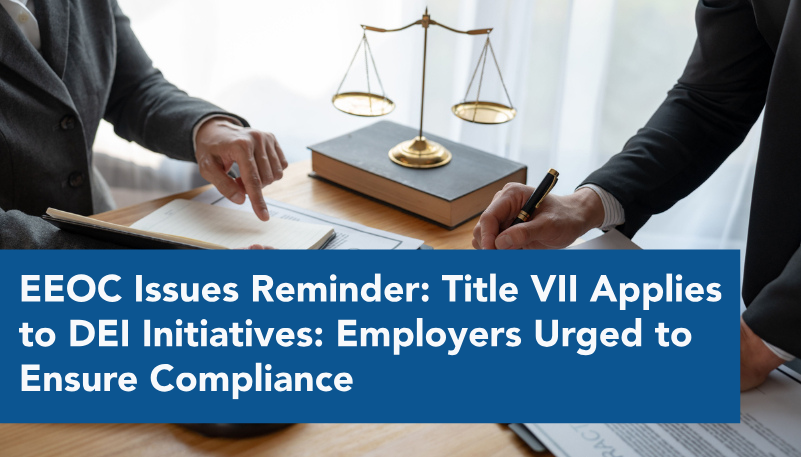
Washington, D.C. — February 2026 — The U.S. Equal Employment Opportunity Commission (EEOC) has published a reminder highlighting employers’ obligations under Title VII of the Civil Rights Act of 1964 as they relate to Diversity, Equity, and Inclusion (DEI) initiatives, a message that federal contractors and private employers should take seriously. (EEOC)
While DEI programs have become widespread in recent years, the EEOC emphasizes that Title VII’s longstanding prohibition on discrimination still applies regardless of an initiative’s intent. The agency’s guidance clarifies that any employment action motivated, even in part, by an individual’s race, sex, or other protected characteristic may violate federal law. (EEOC)
Key Legal Takeaways for Employers
DEI Is Not Defined Under Title VII
The term “DEI” does not appear in Title VII itself, and EEOC notes that the absence of a statutory definition does not exempt DEI-related practices from legal scrutiny. Programs labeled DEI must still adhere to the same anti-discrimination standards that have governed U.S. workplaces for decades. (EEOC)
Employment Actions Cannot Be Based on Protected Traits
Under Title VII, discrimination is prohibited if an employment decision, including hiring, firing, promotion, compensation, or access to opportunities, is motivated in whole or in part by race, sex, color, religion, or national origin. This remains true even if the intention behind a DEI initiative is to promote inclusivity.
An employer cannot justify employment decisions based on protected characteristics by citing business necessity, customer preference, or diversity goals. Title VII does not contain a “diversity exception” to the anti-discrimination rules.
Protected Activity Includes Opposing DEI Practices
Title VII also prohibits retaliation against employees who oppose practices they reasonably believe violate the law. An employee who voices concern about a DEI program on that basis may be engaged in protected activity, and retaliation against such individuals can itself result in liability. (EEOC)
DEI Policies Can Create Unlawful Distinctions
EEOC guidance highlights that policies or practices that limit, segregate, or classify employees or applicants based on protected characteristics, even in efforts to structure DEI programming, can violate federal law if they affect terms, conditions, or privileges of employment. Examples include restricting membership in workplace groups based on protected traits or segregating employees in training programs by race or sex.
What This Means for Federal Contractors & Private Employers
The EEOC’s guidance serves as a reminder that longstanding federal civil-rights requirements govern all aspects of employment, including initiatives labeled DEI. Federal contractors, in particular, operate in an environment already shaped by enforcement actions under Title VII and related laws. The message is clear: DEI efforts must be implemented in ways that comply with anti-discrimination law.
Here are recommended best practices for employers:
- Review All DEI-Related Policies
Employers should audit existing DEI policies, practices, and programs to ensure they do not incorporate criteria based on protected characteristics in employment decisions. Policies must be neutral and objective.
- Avoid Preferences or Quotas
Formal or informal quotas or “balancing” practices designed to achieve representation goals based on race, sex, or other characteristics can violate Title VII unless a bona fide occupational qualification applies (which is rare and does not cover race).
- Ensure Access to Opportunities Is Equitable
Access to training, mentorship, leadership programs, and internal opportunities must be based on neutral criteria such as performance, qualifications, and documented competencies. Practices that explicitly group or favor employees by protected traits risk unlawful discrimination claims.
- Train Supervisors and HR Professionals
Employers should train leadership and human resources professionals on Title VII requirements, including how DEI initiatives intersect with federal anti-discrimination laws. Awareness prevents inadvertent discrimination and strengthens legal defensibility.
- Protect Against Retaliation Claims
It is equally important to prevent retaliation against employees who raise concerns about potential discrimination, even in the context of DEI, as Title VII explicitly prohibits adverse actions for protected activity. (EEOC)
Navigating a Changing Compliance Environment
The EEOC’s reminder complements broader federal policy signals and mirrors positions from other enforcement bodies emphasizing that intentional discrimination, regardless of underlying goals, remains unlawful. Employers should interpret these communications not as discouragement of inclusive workplaces, but as reinforcement that inclusive goals must be pursued within the boundaries of federal law. (Employer Law Report)
For federal contractors and private employers alike, this means evaluating workplace initiatives through the lens of Title VII’s core requirements and documenting neutral, performance-based justifications for all employment actions.
Conclusion: As DEI continues to evolve in the workplace, federal contractors and large employers must ensure their policies and programs do not inadvertently run afoul of Title VII’s prohibition on discrimination. Careful review, training, documentation, and legal guidance will be essential to maintaining lawful, inclusive employment practices in a landscape where enforcement priorities are actively being clarified by the EEOC and DOJ. (EEOC)
Download our Compliance Checklist to assess your risk exposure, identify blind spots, and ensure your policies, training, analytics, and compensation practices are structured for both compliance and competitiveness.