

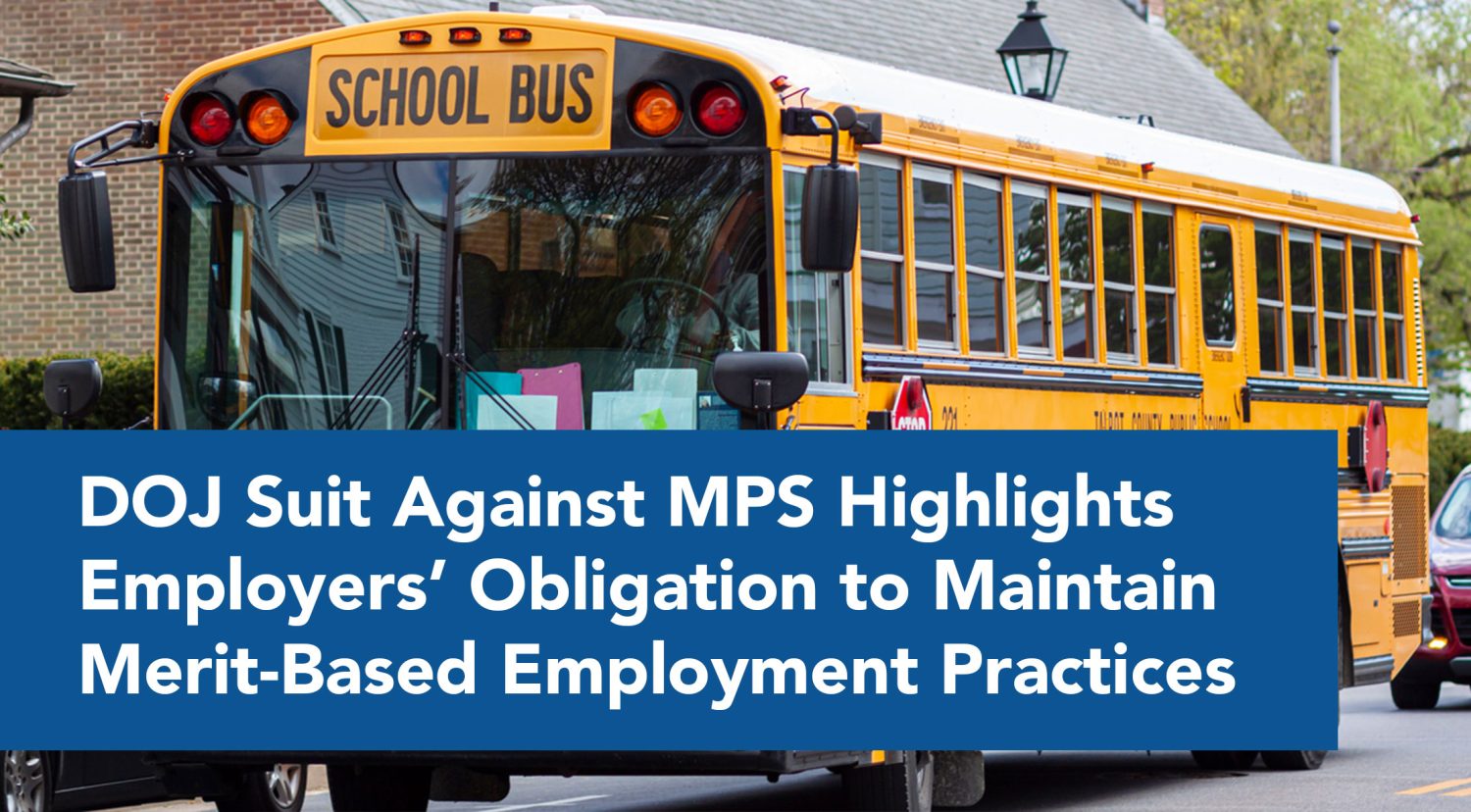
On Dec. 10, 2025, the U.S. Department of Justice (DOJ) filed a federal lawsuit against Minneapolis Public Schools (MPS), alleging unlawful race- and sex-based employment practices embedded in the district’s collective bargaining agreement (CBA). According to the complaint, MPS prioritized teachers who belonged to “underrepresented populations,” set explicit numerical staffing goals for “BIPOC” employees, and granted unique employment benefits to members of a program called “Black Men Teach Fellows.”
For federal and private employers alike, this case underscores a fundamental principle of Title VII of the Civil Rights Act of 1964 and multiple anti-discrimination laws: Employment decisions must be based on merit, not race, ethnicity, sex, or membership in any identity group.
What the Lawsuit Claims
The DOJ’s complaint alleges that:
- MPS established targets requiring that 40% of staff and 54.3% of new hires be individuals identifying as Black, Indigenous, or People of Color (BIPOC).
- Teachers were classified for layoff, recall, or reassignment based on whether they belonged to an “underrepresented population.”
- Members of the Black Men Teach Fellows program received employment benefits not available to female, non-Black, or non-member teachers.
DOJ leaders were direct and unequivocal:
“Discrimination is unacceptable in all forms, especially when it comes to hiring decisions… Our public education system must be a bastion of merit and equal opportunity, not DEI.” – Attorney General Pamela Bondi
“Employers may not provide more favorable terms and conditions of employment based on an employee’s race or sex.” – Assistant Attorney General Harmeet K. Dhillon
The government seeks declaratory relief and a permanent injunction barring MPS from enforcing or reenacting such provisions.
The Compliance Takeaway: Merit-Based Employment Is the Law
Under Title VII, EO 14173, and the entire federal anti-discrimination framework, employers may not:
- Hire, promote, discipline, reassign, or terminate based on race, sex, national origin, or religion
- Offer employment benefits or terms based on identity
- Set staffing goals, targets, or quotas tied to race, ethnicity, or sex
- Prioritize or preference employees because they belong to “underrepresented” or “preferred” groups
Even when well-intentioned, such as aiming to diversify a workforce, these practices can expose employers to severe legal and financial risk, including civil liability, investigations, contract jeopardy, and False Claims Act exposure under EO 14173 for federal contractors.
The lawful alternative?
Merit-based, identity-neutral employment decisions supported by consistent documentation, validated processes, and job-related criteria.
Why This Matters for All Employers, Not Just School Districts
This lawsuit highlights a broader national shift:
Identity-based hiring and workplace programs are receiving heightened scrutiny from the DOJ, EEOC, courts, and state attorneys general.
DEI initiatives that cross into preferential treatment, even if framed as efforts to “increase representation,” “close demographic gaps,” or “support underrepresented employees” must be carefully reviewed for compliance risk.
This is especially urgent for federal contractors who eventually certify anti-discrimination compliance under EO 14173 and face enhanced investigation authority across the EEOC, OFCCP, DOL, DOJ, and contracting agencies.
Best Practices for Maintaining a Legally Defensible, Merit-Based Employment System
Below are recommended practices for organizations seeking to both comply with federal law and promote fair, inclusive workplaces without violating anti-discrimination statutes.
- Eliminate Any Identity-Based Preferences or Targets
- Remove race-, ethnicity-, sex-, or religion-based quotas, goals, or hiring targets.
- Avoid language in policies, CBAs, or programs implying preferential treatment.
- Do not classify employees by protected characteristics for employment decisions.
- Adopt Uniform, Job-Related, and Documented Selection Criteria
- Use validated, objective criteria for hiring, promotion, reassignment, and layoffs.
- Train managers on how to apply criteria consistently.
- Document decisions thoroughly to demonstrate merit-based reasoning.
- Review All DEI, mentorship, and leadership programs for compliance
Programs limited to specific races or sexes present immediate legal risk. Instead:
- Offer opportunities based on neutral eligibility criteria (e.g., tenure, performance, interest).
- Design programs focused on skill development rather than identity membership.
- Ensure Compensation and Benefits Are Administered Equitably
- Provide the same benefits, stipends, and opportunities to all employees in comparable roles.
- Avoid offering unique incentives tied to demographic classification.
- Conduct Title VII & EO 14173 Compliance Audit Annually
A professional audit should review:
- Job descriptions and selection tools
- CBA terms
- DEI programs
- Promotion and discipline patterns
- Pay equity analyses
- Workforce analytics for disparate impact risks
- Train Leaders on Anti-Discrimination Obligations
Supervisors and HR teams should understand:
- What constitutes disparate treatment vs. disparate impact
- How to avoid unlawful preferences
- How to make defensible, merit-based decisions
- How to document decisions properly
- Communicate a Merit-Based Philosophy Across the Organization
Employees should understand that:
- Employment decisions are identity-neutral
- Merit and qualifications drive opportunities
- The employer is committed to equal opportunity, not preferential treatment
- Reporting channels exist for concerns or inconsistent practices
Conclusion
The DOJ’s lawsuit against Minneapolis Public Schools is a powerful reminder that equal opportunity does not allow identity-based preferences. Employers must navigate compliance in a legally precise way:
Promoting fairness and opportunity without violating the core protections of Title VII.
A strong, compliant approach centers on merit, job-related criteria, and equal treatment for all employees, the foundation of a modern, legally sound workplace.
At HR Unlimited Inc., we help federal contractors and employers navigate complex compliance requirements while building stronger, more inclusive workplaces. If you’re ready to strengthen your compliance and equity efforts, contact us today to learn how we can support your EEO and non-discrimination goals.