

Title VII & EO 14173 Compliance Specialist (TCS) Certification

A professional credential in anti-discrimination compliance, merit-based employment systems, and federal certification readiness.

This comprehensive certification program requires completion of 6 required and 2 elective webinars, designed to equip HR and compliance professionals with the practical knowledge needed to operate confidently under Title VII, EO 14173, Section 503, and VEVRAA, while avoiding enforcement, False Claims, and certification risks.

$10,900 Value, Yours Free!

With a $10,900 market value, this credential is being offered free of charge

Why? Because we believe organizations and practitioners must be empowered with legally defensible, merit-based employment practices to protect their workforce, their contracts, and their reputation in today’s heightened enforcement environment. 

Master the Principles

This program will both reinforce and increase your mastery of EEO and Inclusion principles and best practices, providing opportunities for enhanced growth, professional development and competency in the EEO and Inclusion areas, affording you greater career/promotion opportunities in your chosen profession.

Implement Good Faith Efforts

The Title VII & EO 14173 Compliance Specialist (TCS) Certification aims to help you develop and implement effective Good Faith Efforts (GFEs) to recruit and retain best talents, evaluate performance based on merit, and stay ahead of the curve.

Be an Expert

The TCS Certification will validate and increase your knowledge, setting you apart as an undisputed expert and leader in your field, earning you recognition from your organization and your peers.

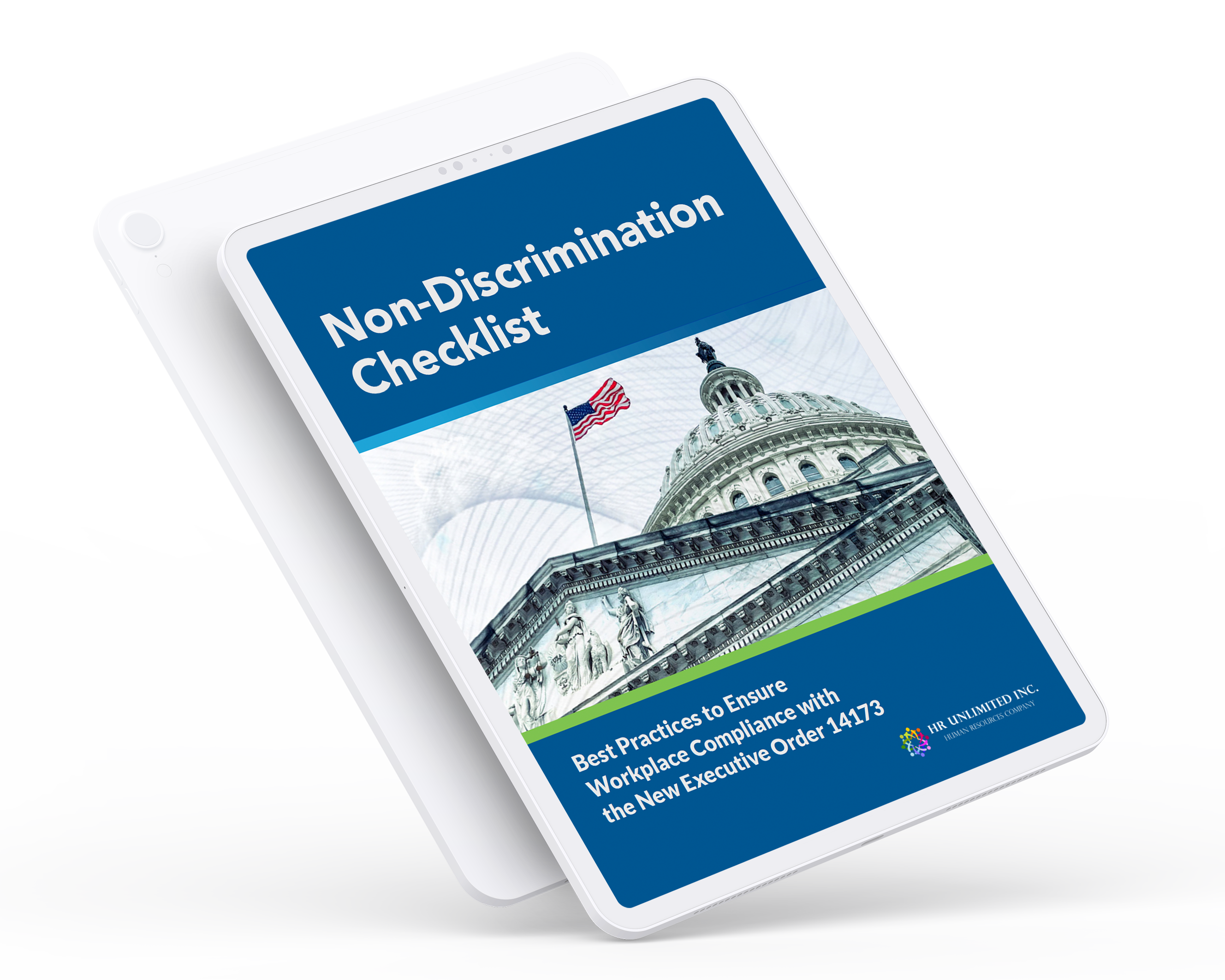
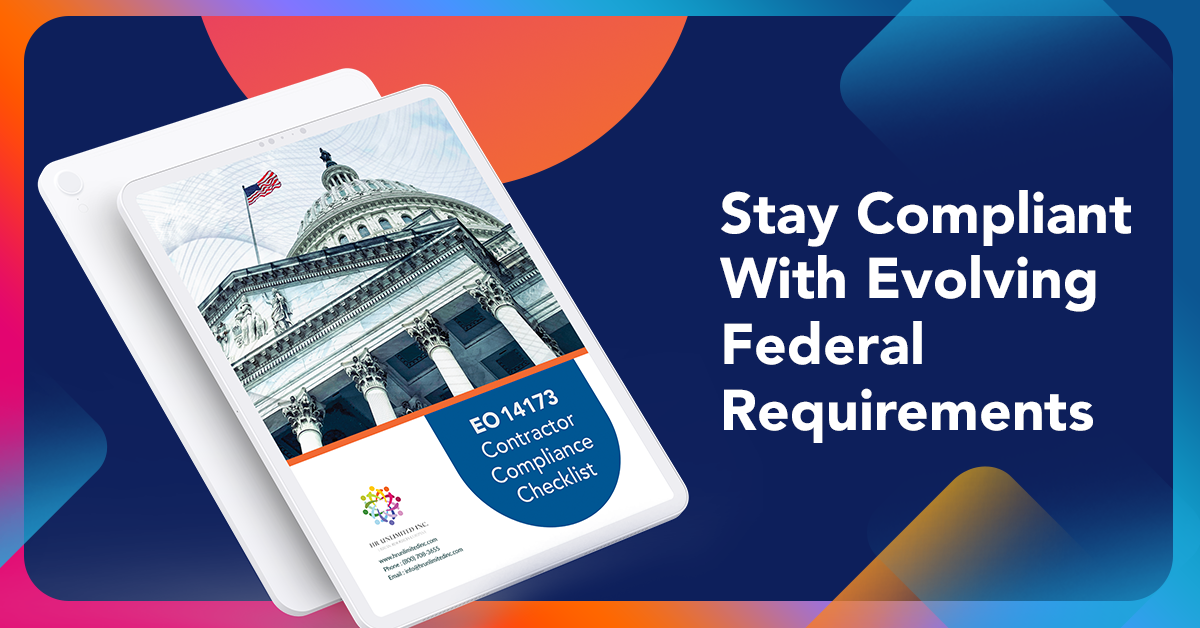
EO 14173 Compliance Checklist

Our EO 14173 Contractor Compliance Checklist provides a comprehensive framework to help you adapt your non-discrimination efforts while staying compliant with evolving federal requirements. Take control of your compliance strategy. Missteps can lead to audits, contract loss, or False Claims Act exposure.

Contact Our Experts Today

At HR Unlimited, Inc., we go beyond checking compliance boxes. We help you maximize the return on your compliance investment by identifying risks early, reducing legal exposure, and providing actionable strategies that support long-term organizational success.

Whether your needs are immediate or ongoing, we’re here to help. Let our experts manage your EEO, affirmative action, anti-discrimination, compensation, and reporting requirements, so you can stay focused on growing and leading your business.

Latest Insights

Federal, State & Local Compliance Requirements

The specific federal, state, and local compliance requirements an employer must meet depend on the type of organization and the nature of the contracts it holds.

Common examples of these obligations include:

Annual Compliance Reports

Annual Anti-Discrimination Certification under the False Claims Act

Affirmative Action Programs (AAPs) compliant with Section 503 (Individuals with Disabilities), VEVRAA (Protected Veterans), and applicable state requirements

Compensation design/Benchmarking and equity analysis

EEO-1 Reporting

VETS-4212 Reporting

Workforce Composition Reports

Construction Compliance Assistance

Construction Workforce and Analytics Reporting (Monthly and Annually)

…and many other requirements that vary based on jurisdiction and contract scope.

Employers must stay informed and vigilant to ensure full compliance and avoid the legal and financial risks associated with non-compliance.

Workforce and Employment Practices Assessment

The Workforce and Employment Practices Assessment enables organizations to proactively examine the root causes and impacts of potential illegal discrimination and non-compliance before facing the serious consequences of costly litigation, or suspension or debarment from federal contract eligibility.

Beyond legal and financial penalties, the reputational damage from non-compliance can erode stakeholder trust and jeopardize future business prospects. To safeguard against these risks, organizations must cultivate a culture of compliance one in which employees at all levels are informed of regulatory obligations and understand the critical importance of accurate reporting and adherence to anti-discrimination laws.

Regular training, internal audits, and timely policy updates aligned with current legal standards are foundational to a robust compliance program. By investing in these preventative measures, employers not only reduce exposure to risk but also reinforce their commitment to ethical, fair, and inclusive workplace practices.